Weightless In The Womb
On internal alarm systems. Plus, turning grief into art and stand-up comedy.

A baby is lightest in the womb. The amniotic fluid holds 90% of their weight, making a seven pound baby feel lighter than a single pound. Cradled by the protective fluid and the shell of the mother’s womb, the baby is safe. It’s only once the tether is cut that they finally feel the weight of their own body. They crawl until they can stand; trip over their own feet until they can put one foot in front of the other. Eventually, they learn how to manage the gravity of life.
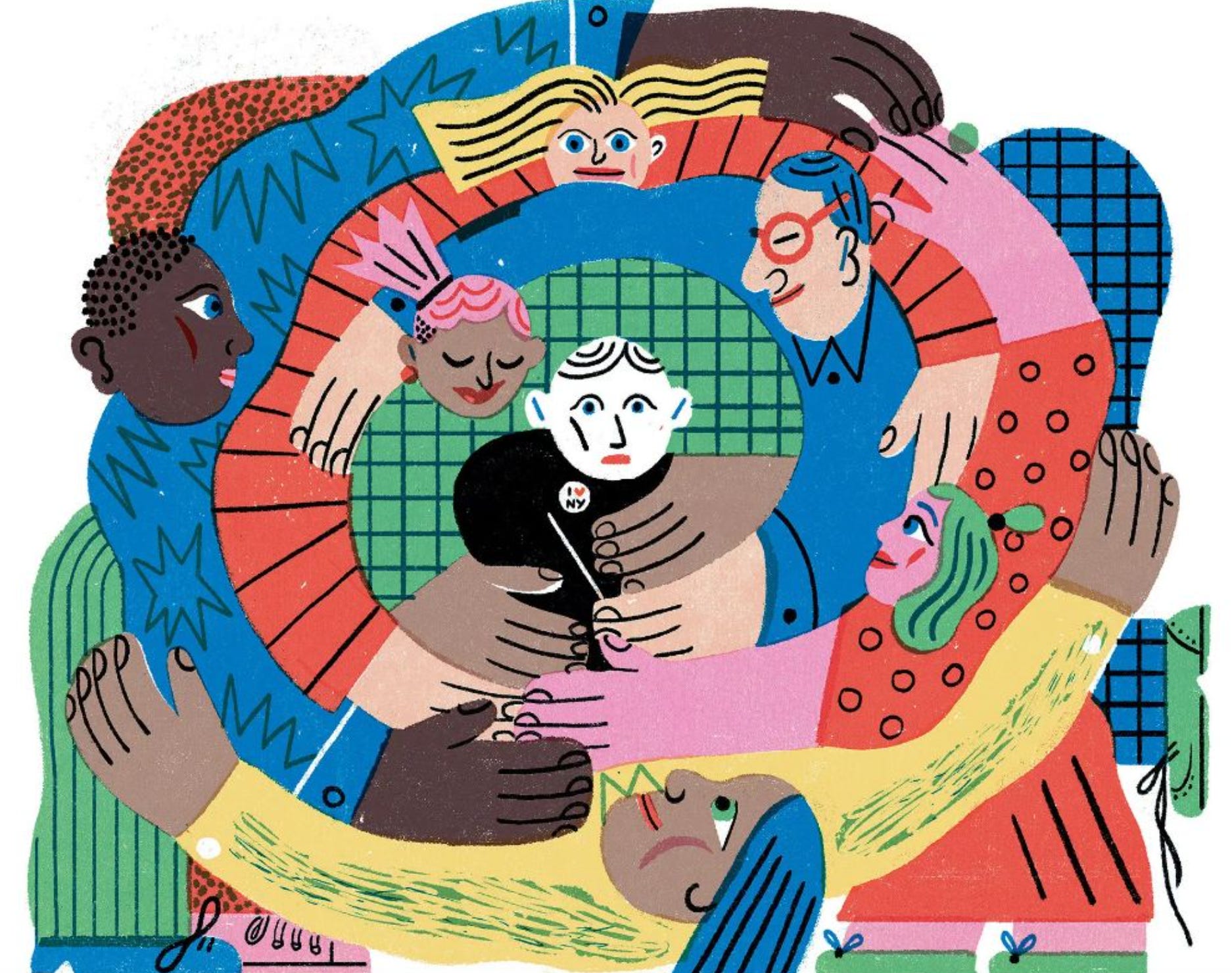
Lately I’ve been practicing visualization to regulate my nervous system. This week, the visual I keep returning to is of an adult cradled by everyone and everything that has ever loved them. Together, they form the shape and protective shell of a mother’s womb. The love of many lessens the load.
“All you need is love,” I hear on the radio in a gift shop the other day. I think of mom. She loved The Beatles, and all things UK.
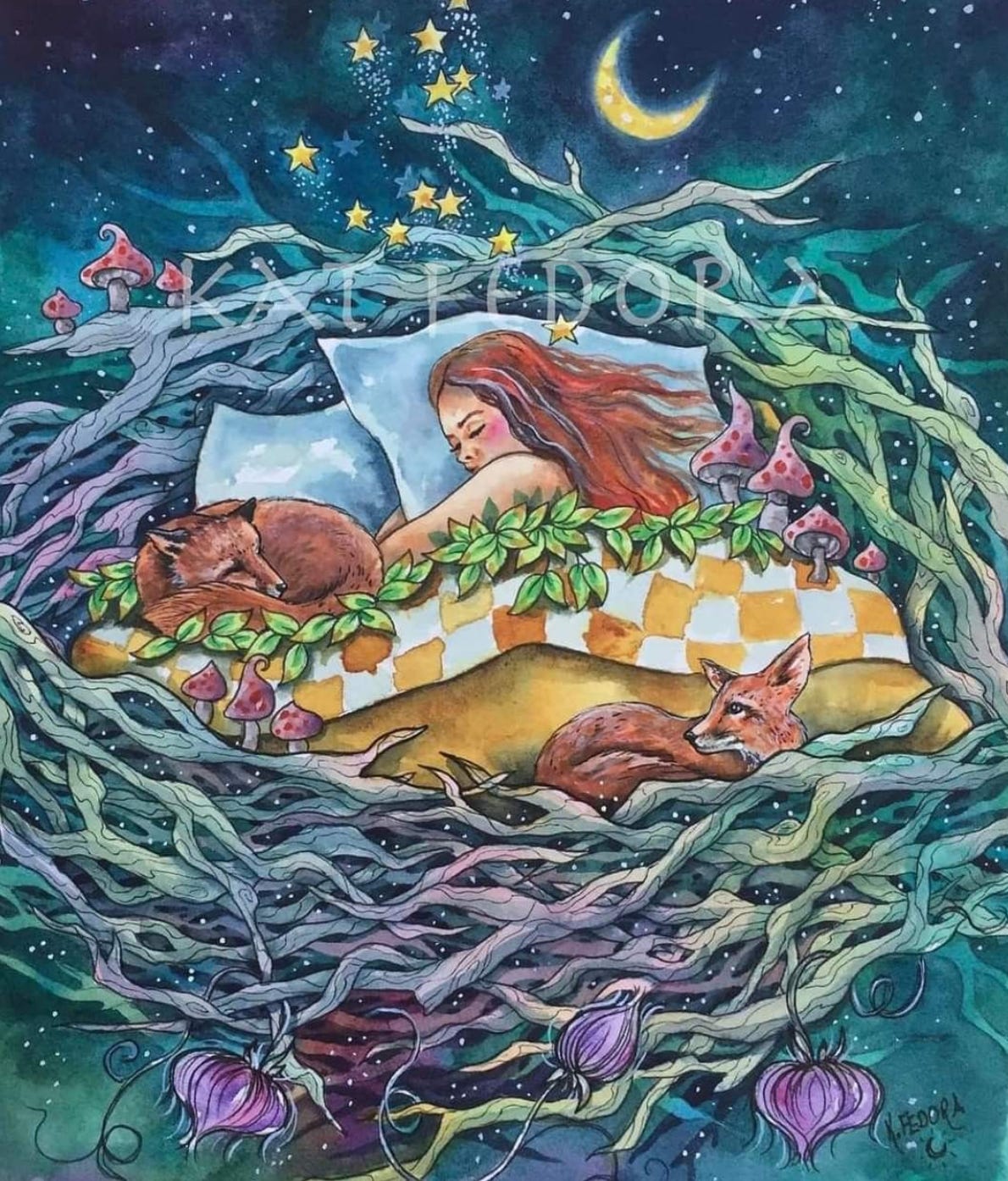
I’m still thinking of her after the sun goes down and I’m lying in her bed, facing another sleepless night ahead. Tears stream down my cheeks softly, easily. The grief is just as heavy as ever. But I’ve lived with it so long, it doesn’t have as much energy to expend as it used to. I’ve exhausted the reserve of tears. Just as I’m picturing her, a loud beep from the hallway. And then another, and then another. It’s my fire alarm.
A medium once told me spirits communicate through electricity. Supposedly ghosts operate at a high frequency that naturally interferes with electrical currents. Ever since, I’ve interpreted electrical disturbances as visits from mom. Most often it’s flickering lights, occasionally it’s my music or the TV turning on. The most dramatic was the time mom’s electric reclining chair began rocking back and forth on its own. Every time, I want to believe her. “It’s probably just the fire alarm dying slowly,” I tell myself. Things tend to die in this apartment.
“My body is safe, I am safe,” says my restorative yoga instructor.
I call the property manager the next day and find out I can, despite appearances, take down the fire alarm and remove the batteries. “But of course, I can’t advise you to leave it without batteries overnight.” I disobey her and remove the batteries. I double-check the stove is off. With an empty soundscape, I finally fall asleep, thinking of how mom would rather listen to that annoying persistent beep all night then go to sleep with the risk of not being alerted to a fire.
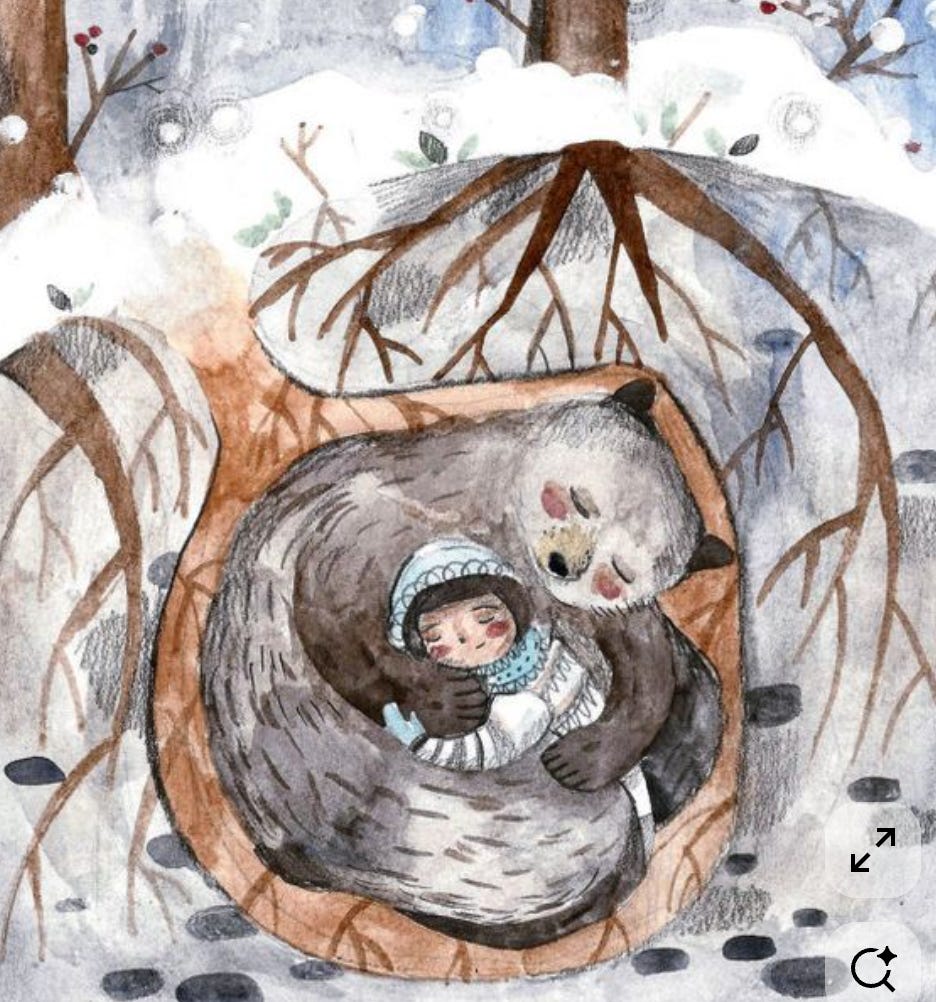
Fires were always mom’s biggest fear. When I was a little girl, I’d peep her at the stove every night before bed. Her head slowly bobbed up and down as she stared at each burner dial and counted to ten. I was too young to recognize the compulsive ritual as OCD. I just thought she looked peculiar, there was nothing else that caused her eyes to enter such a trance.
You might chalk up her fear of fire to the shape of our home—a skinny, five-story townhouse with the kitchen on the second floor. But I know it was deeper than that. It wasn’t about the fire itself—the uncontrollable flames, the lethal heat and smoke—it was about safety. Mom’s childhood home didn’t feel safe. So she learned young to always be on the lookout for danger.
“My body is safe, I am safe.”
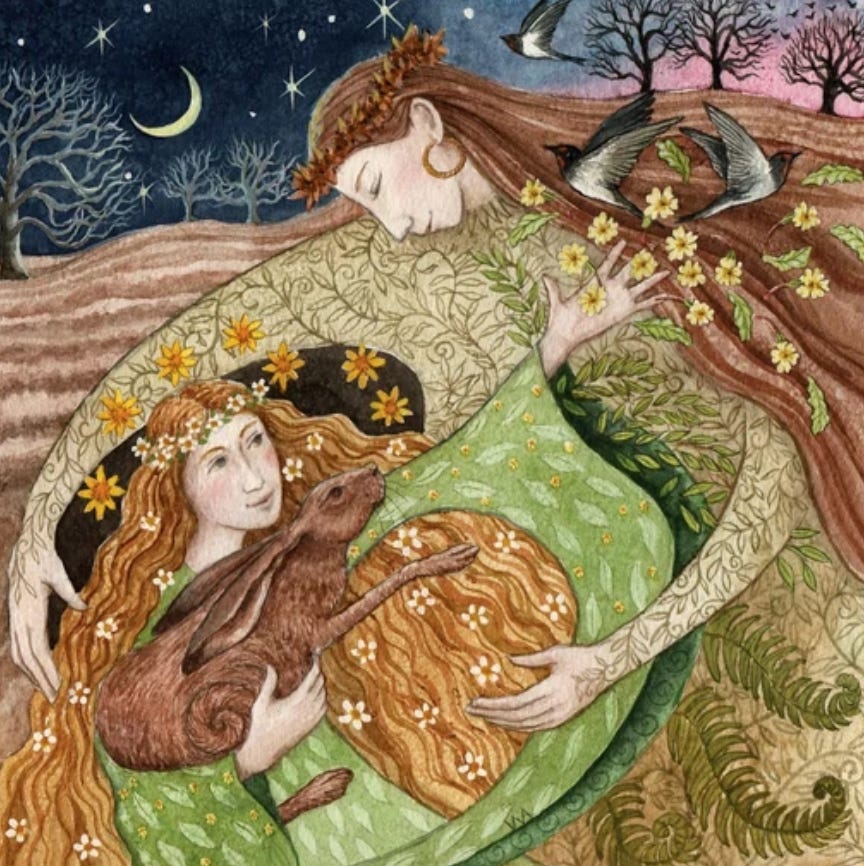
I ask my therapist why I feel so anxious during periods of relative calm, when I have nothing tangible to fear. She tells me if you felt unsafe as a child, your nervous system is hardwired to be vigilant; you’re always anticipating the next threat. It’s a self-protective mechanism. The internal alarm system never quiets.
“The body remembers things the mind has long forgotten,” says my restorative instructor.
Lately it feels like my own internal alarm system has been persistently sounding. I’m so afraid of having the same fate as my mom, dying young. Every night, I resist sleep because I’m afraid I won’t wake up. It’s not the sensation of death that scares me; it’s the vulnerability, the shame of it. Unlike my mom, there is no one coming home to find me. The only other person who lived with me is a ghost. Mom is nowhere to be found, but her death lingers everywhere.
The next day I turn on an episode of Hidden Brain to learn how to exercise the empathy muscle. The opening anecdote is a man in his 50s, who is terrified of dying because all the men in his family died of strokes in their 50s, similar to women in my family dying of brain aneurysms. Nope. I turn it off and switch to a light rom-com I’ve been listening to, only to find out the protagonist and I have the same history.
I never think about my dad but when I think about how my mom died, I do. I wonder if he had stuck around, if she wouldn’t have died. It’s like, on a rational level I know that. But aneurysms can be caused by stress. Maybe if she wasn’t a single mom juggling a very emotional eight-year-old daughter, she wouldn’t have…
The aneurysm had nothing to do with you.
I’m afraid I’ll end up like my mom.
I picture my grandfather cradled in a womb of all the love he never gave. If he can be loved, even long after he’s gone, maybe we all can too.
Best,
Anna
Reading 📖
They say there is no grief worse than the loss of a child. So one can only imagine the pain of losing two sons to suicide. In 2017, Yiyun Li lost her son Vincent, aged 16, followed by her 19-year-old James seven years later. I recently started her latest, Things In Nature Merely Grow, and so far I’m stunned, not only for the revelations it offers on the experience of grief, but also on how society deals with grief.
“Children die, and parents go on living. Those parents go on living because death, though a hard, hard thing, is not always the hardest thing. Both my children chose a hard thing. We are left with the hardest: to live after their deaths.”
“Writing is hard. Living is harder.”
-Yiyun Li, Things In Nature Merely Grow
Li’s memoir is an account of her experience, but it’s also a work of philosophy and narrative criticism. English being her second language (she emigrated from China to the US in the 90s) gifts her with a nuanced understanding of language and the power of words. As New Yorker critic Alexandra Schwartz says, “This book is sublime: words fail and fail and fail, but still they do something.”
“Grieving is not a useful word for Li because it implies an end point, a release from the loss. There is no redemptive moment of healing here; things in nature merely grow, they are not automatically resolved, wounds are not neatly sutured. But growing is life and Li is, and always will be, a mother. Her book is a meditation on living and radical acceptance that has the potential to offer deep solace; comfort from the abyss.” - Suzanne Joinson reviews for The Guardian.
Articles
💊 Amanda Peet on her season of Ativan.
💻 When your digital life vanishes.
🤳 The loneliness influencers.
😴 I haven’t slept more than 5 hours in several months now. For short sleepers, this is their norm.
🎧 Why I stopped reading and embraced audiobooks.
Watching 📺
Lately I’ve been seeking out stand-up, because laughter is medicine, right? Ramy Youssef’s latest special In Love (HBO, Prime, Crave) lives up to the hype. He talks AI, getting married, and his love for his dog, three topics I couldn’t care less about, and I was completely enthralled. Also: meeting the pope, the Saudi comedy drama, and the current masculinity crisis. I most respect a comedian who can pull of uncomfortable topics (in this case, Islamophobia and the U.S. relationship with the Middle East) without being offensive. Youssef’s storytelling is made that much more moving by his honesty and tender genuineness.
Youssef is one of few comedians I’ve loved from day one. Most have to win my approval. I’ve long been irritated by Kevin Hart, but I was hearing lots about his recent roast so I turned it on, or so I thought. Instead, I accidentally selected his new comedy reality competition, Funny AF with Kevin Hart. The show travels to New York, LA, and Chicago to find the next great stand-up comedian. Short sets by stand-up competitors are interspersed with a roundtable between Keegan-Michael Key, Kumail Nanjiani, and Chelsea Handler, in which they discuss the comedic process I’ve long been ignorant too. Later, other celeb judges join like Nikki Glaser and Tom Segura. Over time, you develop your favorite comedians, but it’s still refreshing to hear such a diversity of styles and stories. I was surprised how much I loved this.
Listening 🎧
Art can provide a refreshing break from the harsh realities of the world and an escape from the mundanity of daily life. But it also can carry us through the dark, acting as a guiding light. From the funerary hieroglyphics of Ancient Egypt to the body art of Aboriginal cultures used as ancestral medicine to externalize deep pain—humans have turned to art to process loss for millennia. I loved this critical discussion of what grief as art looks like today. I wonder what it says about our current culture that many of today's grief portrayals lean comedic (think: Rachel Bloom’s Death, Let Me Do My Special; Marc Maron: From Bleak to Dark; and Sarah Silverman: PostMortem).
Snacking 🍌
My best recent eat was at Bagels on Fire, a Toronto bagel spot that markets itself as Montreal-style. I’m not sure they’re true Montreal bagels, but they’re certainly denser than New York bagels. Having lived in Montreal for five years, I have an affinity for Montreal bagels, and will always choose them over the big, fluffy ones in New York. My usual order is lox and cream cheese, but I switched it up and tried Bagels on Fire’s pesto turkey mozzarella sandwich and I’m glad I did. 10/10.