Learning To Let Love In
How my 18-year-old cat changed me. Plus, an addictive influencer story, how to be kind, and fiery foods to warm up in a polar vortex.

It’s 4 AM, another restless night. I hear a crash in the kitchen, followed by an unusual meow. I round the corner of the hallway to find my cat, Penny, has collapsed. She’s conscious but listless, her eyes a haze of gray. My heart accelerates as I kneel down to her. Penny? Are you ok? I ask, pointlessly.
My own eyes glaze as the scene activates my muscle memory. It’s 10 years prior, I’m in the same apartment, finding my mom lying unconscious on the floor. I don’t know what to do. I call 9/11. I’m helpless. Time simultaneously accelerates and slows.
Once my mom was at the hospital, they weren’t sure if she would survive the night. But the ICU doctor, perhaps sensing my exhaustion, instructed I go home, get some rest, and return in the morning. I did, reluctantly, but I shouldn’t have. Because how can one possibly sleep knowing the person they love the most might die in their absence?
And here I was again, waiting, trying to sleep, anticipating death. With no emergency pet hospitals in the area and Penny’s vet closed for another 5 hours, I had no choice but to wait. I lay in bed, frozen in a cold sweat of fear. Would I come out in a few hours to find Penny dead?
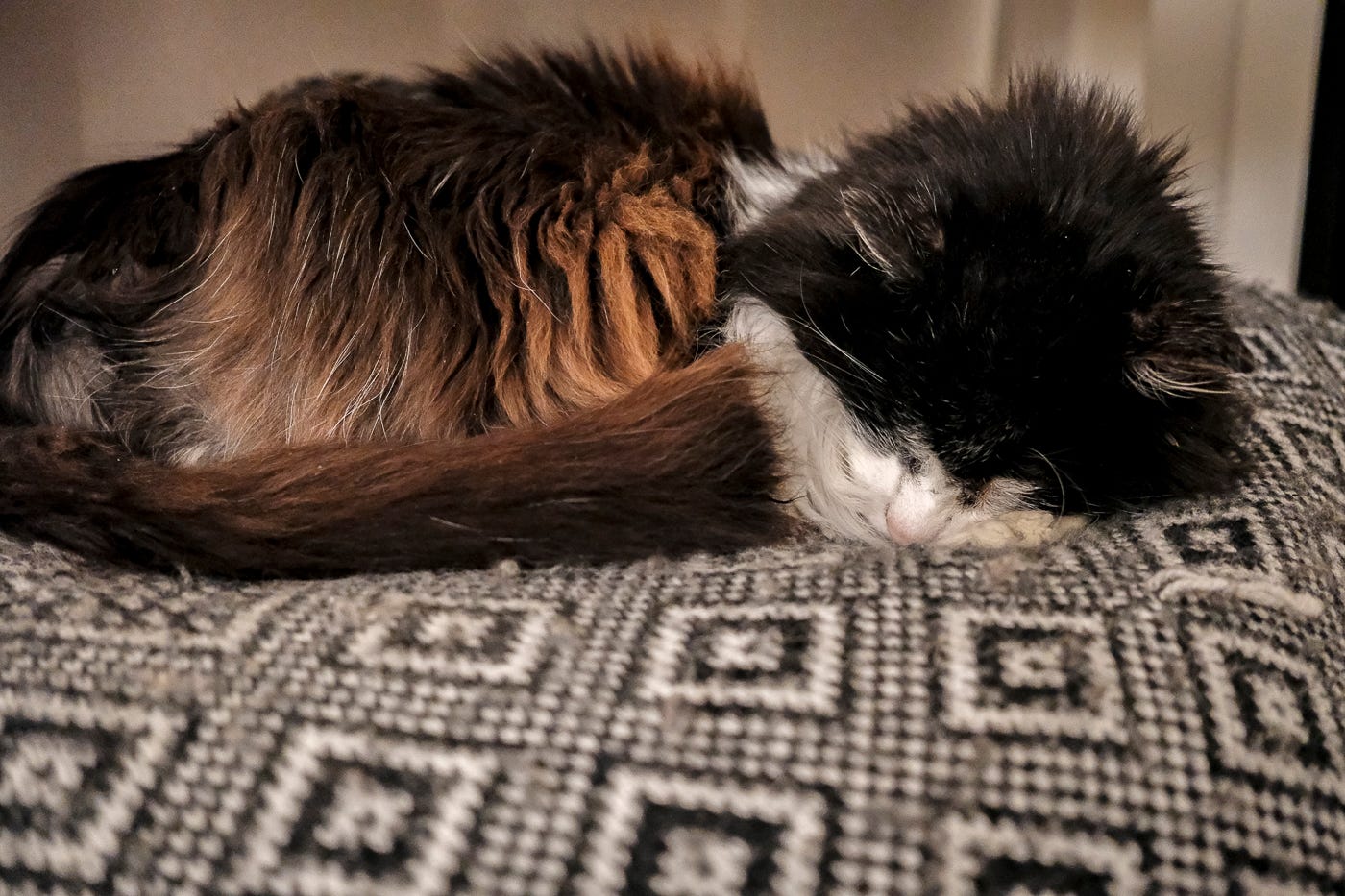
Like my mom, she made it through the night. I decided to euthanize her that day, just like I did with my mom. The first place I went after my mom died was the grocery store. I realize this as I stand in the grocery store immediately after putting Penny down. Spice Girls’ Wannabe is playing, and the cognitive dissonance of the bubble gum pop with my own exhaustion makes me wonder if this is all a dream. It feels like a message from the other side, because I used to name my cats after the Spice Girls members. There was the siamese I named Posh as a kid, and the fluffy white calico I named Emma as a teenager. Penny (Penelope) was named after Penelope Cruz, because of her tuxedo black and white coat.
That night, we end restorative yoga class by pressing our hands firmly into our chest, just below our collar bones, to “trick our nervous system into feeling we’re being hugged.” I recall an anecdote a close family friend who once looked after Penny told me recently. Shortly after my mom’s brain injury when I was a little girl, after hugging said friend goodbye, I ran back up to her and asked, “can I have another one?” I don’t recall this but it makes sense—hugs were not allowed in the cold home I’d moved to in Calgary while my mom was in a coma. Somewhere between childhood and adulthood, I stopped asking for hugs. Eventually I thought I didn’t need them.
Penny was like this too. When my mom and I went to the humane society to get a kitten, she took one look at the one-eyed cat who was slightly older than the rest, and said, “we have to take her, no one will.” Perhaps my mom, being disabled, felt a kinship with the one-eyed kitten, who clearly had been through something. For the next decade, Penny remained a skittish, scared creature who spent most of her time hiding in the dusty shadows under my mom’s bed, bizarrely finding comfort in hanging off the bottom slats of the bed frame. She rarely approached us for cuddles, and was terrified of visitors.
And then, Penny changed.
During COVID lockdown, we moved in with the friend I had once asked for an extra hug and her husband. Having always had pets, Penny and I caught them at a rare “empty nester” moment. They showered Penny in affection. I should’ve done this years prior, but having never received this kind of affection myself, it wasn’t in my nature. At first, Penny remained standoff-ish, but eventually she softened. After our lockdown together, I took home a different cat.
Love, I guess, is infectious, because over the remaining eight years of her life, Penny’s newly open heart softened my own. We grew closer in her old age—she became more dependent on me, and I on her, as I’ve grown lonelier in recent years.
Perhaps the most uncomfortable part of putting her down was asking for help. I’m used to doing hard things by myself, but somewhere in my sleep-deprived state, I found the courage to message a friend and ask if she could come with me to the vet. Rather than put on a brave face and perform strength for the vet had I gone alone, having her there gave me permission to feel. I sobbed into her arms, my body stiff in the unfamiliarity of being held in my vulnerability.
I learned to let in love from Penny.
A few weeks before Penny died, I was picking up her cat litter at the pet store when a long-time employee recognized me and sparked up a conversation. I didn’t know she knew my mom died, but as I was leaving, she followed me outside, and told me how much she admired my mom. “All of this is temporary,” she said, her hand firmly clasped on my shoulder. “She’s waiting for you, up there, you will see her soon.” Soon? I was unsettled by the notion I might be passing over in the near future. But now I wonder if she was referring to Penny.
“She was the last one,” I said to my friend, in the moments leading up to Penny’s passing.
“There’s still you,” she replied.
I’ve been thinking about what it means to be in a hole lately. It’s strange how once you’re in one, you can’t tell how far and how fast you’re sinking further from the surface. You can see the sky but over time, your sense of your distance from it becomes distorted. Despite the familiarity of my mom’s apartment, after five weeks some self-protective impulse in me knew it was time to leave my grief hole.
“Now nobody would remember their lives except me. That was why I had to survive.” - Says 15-year-old Yunjae after his mom and grandma die, in ‘Almond’ by Sohn Won-Pyung.
The past month in Toronto was relentlessly dark, cold, and gray—there had been so few days of sun, I was starting to forget what the sun felt like. After an hour of de-icing the plane on the tarmac at Pearson, we took off, ascending through the heavy overcast sky. Within a few minutes, we were above the thick blanket of clouds, coasting through a clear blue sky. When we’re in a constant fog, it can be hard to remember the light of the sun. But she’s always there, even if we can’t see her.
Best,
Anna
Reading 📖
There are increasingly more fiction stories about influencers and few hold my interest past the first couple chapters. Not Chrysalis by Anna Metcalfe, I couldn’t put it down. We learn about the influencer protagonist from the perspective of three people in her life: an recluse who grows obsessed with her at the gym, her mom who worries about her rapidly growing body and following, and her best friend who supports her after she flees an abusive relationship.
I loved these two excerpts from the mom, following the loss of her own estranged mother.
“It wasn’t particularly difficult to live through tragedy because in tragedy, life simply happened to and around you. Far more difficult, far more exhausting, were the ordinary days when it was up to you to decide what was important and what was not.”
“Somehow without her I felt less alone. I thought about all the other people who had grieved for a mother they didn’t know. It was the same, perhaps, as grieving for the multitude of mothers they may have had. I would mourn the fiction of my mother, for the possibility of making fictions out of her.”
Articles
❄️ This essay about a woman being snowed in with a ghost should’ve gone in last week’s newsletter but alas.
🐛 Ann Patchett on grief and glowworms.
🩺 On ‘The Pitt,’ ER doctors try to fix this broken world.
Aggrieved US citizens are seeking a new life in the Netherlands.
🙋♂️ The current state of masculinity.
🇰🇷 The dissonance of Korean culture going mainstream.
🎭 A NYT journalist investigates why she’s seen the same Broadway show 13 times.
Watching 📺
The best thing I saw this week was Ken Ohara’s photo exhibit at the Whitney. In 1974, he sent a bunch of strangers he found in the phonebook his camera with pre-loaded film with instructions to photograph their lives. Over two years, Ohara’s camera travelled to a hundred participants in thirty-six states across the country.
When I was in photo school, we were constantly questioning how to ethically build a connection with our subjects, so that our documentary projects felt more intimate and authentic. Ohara reveals the solution is simple: give the camera to the subject.
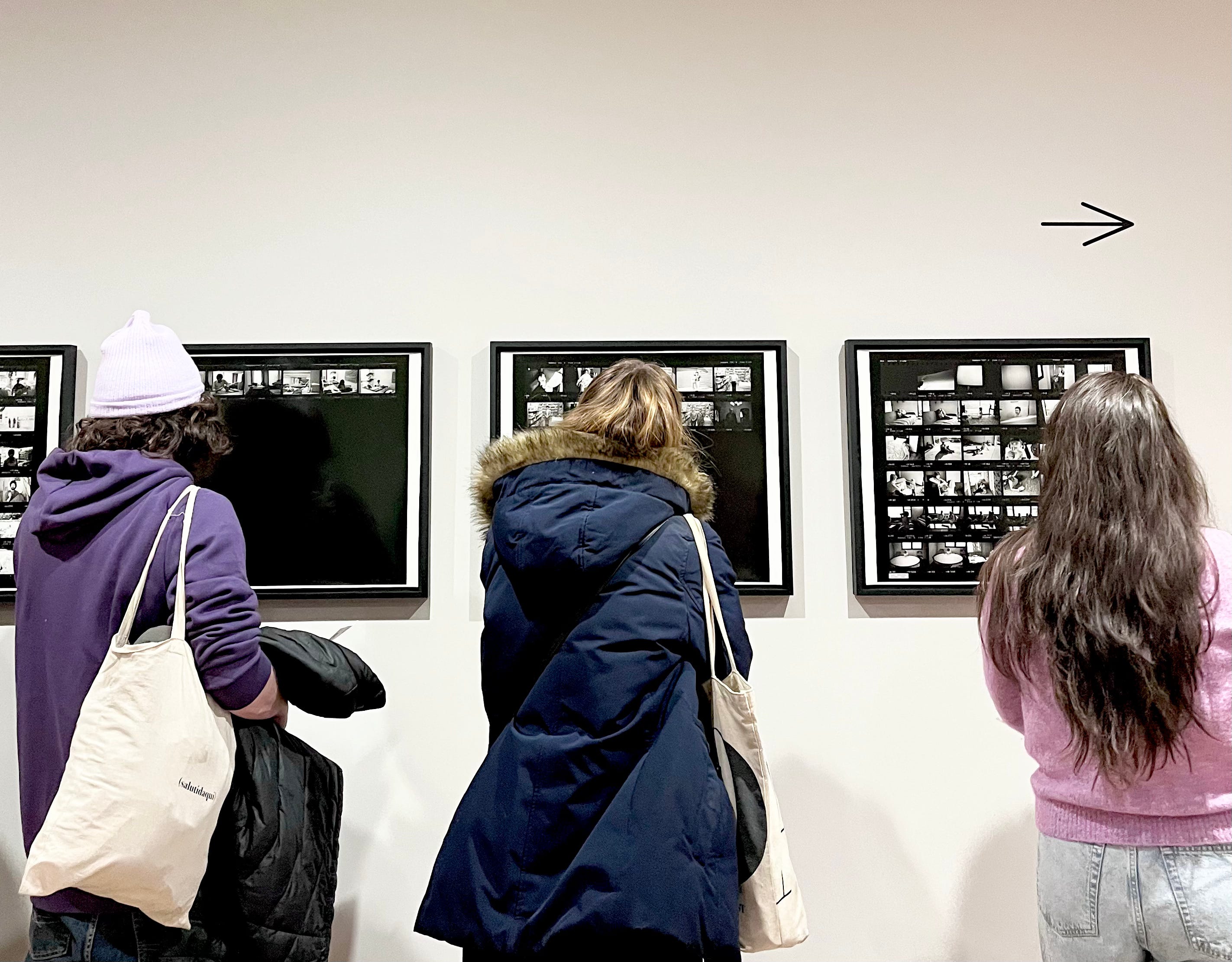
The exhibit also got me thinking about the proliferation of photo-taking technology. Back in the 70s, it was novel and precious, powerful even, to have the ability to document your life in a single roll of film. The subjects in his project report feeling one roll of film was not enough, illuminating the human urge to document the whole picture of one’s life. Now, people can. Yet this constant documentation is rarely portrayed as an accurate, full picture of one’s everyday life.
Listening 🎧
The best thing I listened to during my five weeks back home, was this NYT interview with George Saunders.
This week at Korean book club, we discussed whether reading is an effective means of building empathy and learning to connect with others. George Saunders echos this idea in his conversation with David Marchese.
“It’s becoming clear that writing and reading is a way of simply underscoring that human connection is important, that you can know my mind and I can know yours, which is a vastly consoling idea, and we need it.” - George Saunders.
I love Saunders outlook on grief—rather than mournful, he describes death as a reality. Three powerful death realizations he had between childhood and adulthood changed his outlook on life: 1) You’re not permanent, you’re not the most important, and you’re not separate [from death].
He also talks about his journey from republican to liberal, the power of meditation, and the challenges of being kind.
Snacking 🍌
🍛 I was supposed to go to India this week but another rejected visa means I’m stuck in the polar vortex. With the cancelled trip and freezing temps, I was craving Indian so I went to Inday, an elevated fast casual concept serving Indian bowls, inspired by a recommendation from my fave Korean equivalent, SOPO. It’s tough to get affordable Indian food for one unless you want to eat an entire tray of one curry to yourself—I was pleasantly surprised.
🔥 At home, I’m currently warming up with Wilde’s spicy queso chips dipped in AYOH!’s fiery hot giardinayo mayo (dying to try their miso mayo next) and Fly By Jing’s fire hot pot base and sweet + spicy Sichuan chili sauce.
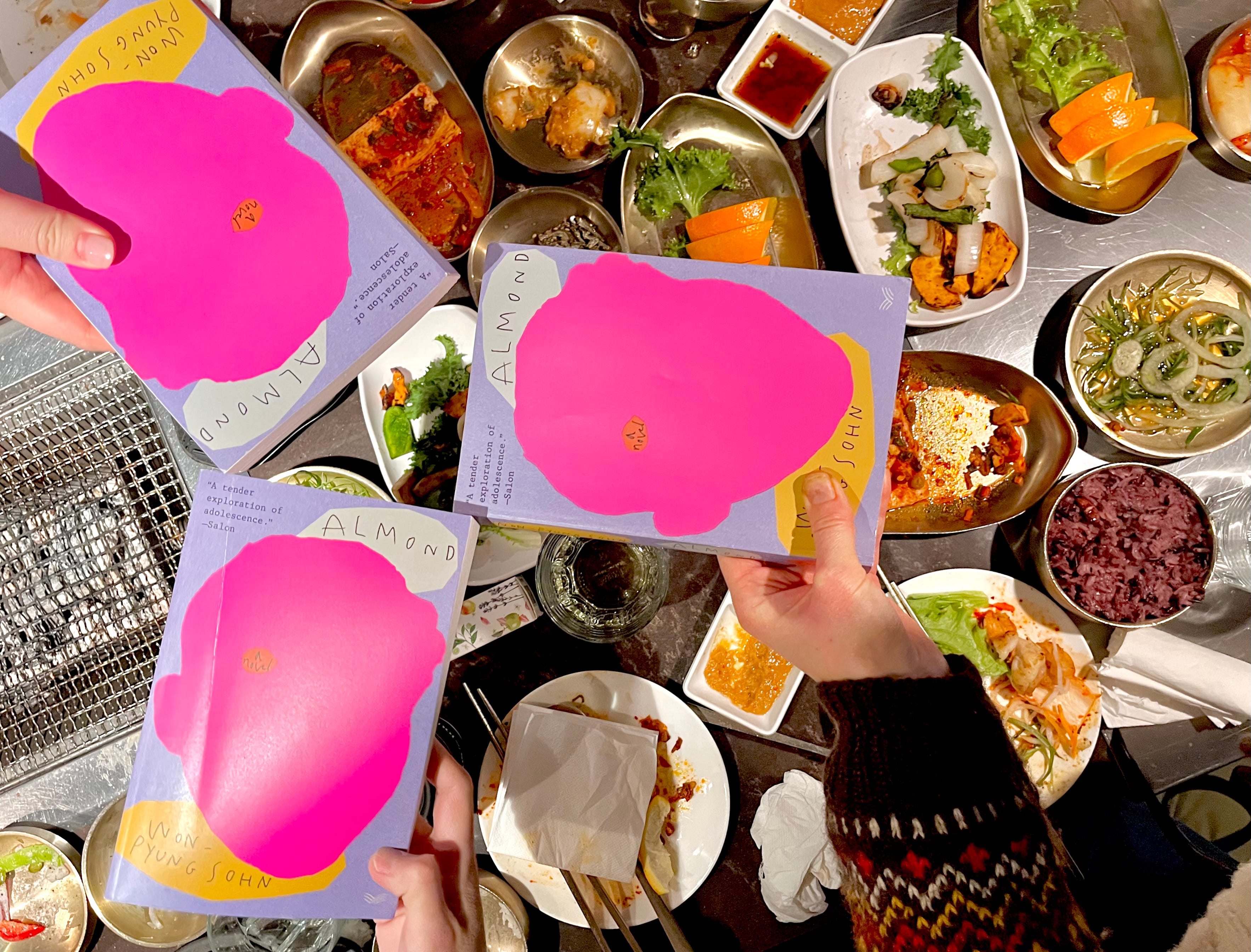
🍚 For Korean book club this week, we went to a restaurant nearly as old as me—New Wonjo in K-Town, a solid K-BBQ choice. For our next book club dinner on April 7th, we’re reading Free Food For Millionaires by Min Jin Lee (author of Pachinko)—reply if you’re interested in joining!
This piece about Penny teaching you to let love in is beautiful. That parallel between how she softened after being shown affection and how that changed you too, is somethig I've seen play out with my own pets. The part about asking for help at the vet really got me tbh.
For attractive lips, speak words of kindness. | For lovely eyes, seek out the good in people. | For a slim figure, share your food with the hungry. | For beautiful hair, let a child run his fingers through it | For poise, walk with the knowledge you’ll never walk alone.
We leave you a tradition with a future. The tender loving care of human beings will never become obsolete. People even more than things have to be restored, renewed, revived, reclaimed and redeemed and redeemed and redeemed. Never throw out anybody.
Remember, if you ever need a helping hand, you’ll find one at the end of your arm. As you grow older, you will discover that you have two hands: one for helping yourself, the other for helping others. ?Sam Levenson, In One Era & Out the Other